
Kolloquiumsprogramm
Das Kolloquium wird in Zusammenarbeit mit dem Forschungsverbund VINAR und der GeoSphere Austria (früher ZAMG) durchgeführt.
Alle Vorträge sind ohne Anmeldung öffentlich zugänglich!
Datum: Dienstags von 16:45 bis 18:15 Uhr
Raum: 2F513 (Exner-Raum), Josef-Holaubek-Platz 2, UZA 2, 1090 Wien und online!
-
04/03/2025 - Markus HOLZNER: "Transport in environmental fluid dynamics: from turbulent dispersion to soil respiration"
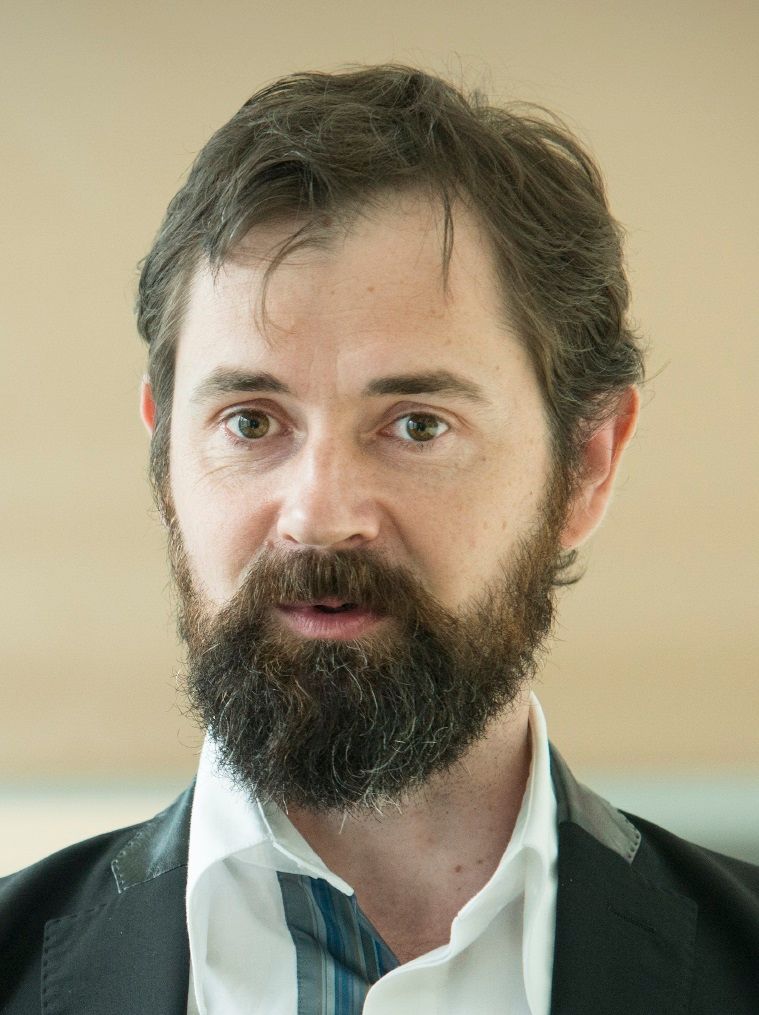
© Holzner Markus HOLZNER (BOKU University Vienna)
In this talk, I sketch some recent themes from my research group in environmental fluid dynamics, starting with a brief survey of the main fluid flow problems that we have been investigating in recent years. Then, I discuss in more depth two topics: the dispersion of particle pairs in turbulence and the emission of carbon dioxide from soils via heterotrophic respiration.
Tuesday, 16:45h - 18:15h
Location: Room 2F513, (Exner-Raum), Josef-Holaubek-Platz 2, UZA 2, 1090 Vienna and online!
-
11/03/2025 - Efrem MACONI: "The Solar System's passage through the Radcliffe wave during the middle Miocene" Changed time 17:00h

© Maconi Efrem MACONI (University of Vienna)
As our Solar System orbits the Milky Way, it encounters Galactic environments with varying interstellar densities. The Gaia mission has revolutionized our understanding of the local stellar neighborhood, revealing coherent gas structures such as the Radcliffe Wave and their motion in space. Our research reveals that the Sun's trajectory intersected this Galactic structure in the Orion star-forming region between 11.5 and 18.2 Myr, with the most likely transit around 14 Myr ago, coinciding with a period of Earth's climate reorganization known as the Middle Miocene transition.
Tuesday, new 17:00h - 18:15h
Location: Room 2F513, (Exner-Raum), Josef-Holaubek-Platz 2, UZA 2, 1090 Vienna and online!
-
18/03/2025 - Andreas DÖRNBRACK: "Transient tropopause waves"
Andreas DÖRNBRACK (DLR, Deutsches Zentrum für Luft- und Raumfahrt)
Flight-level airborne observations have often detected gravity waves with horizontal wavelengths λx≲10km near the tropopause. Here, in situ and remote sensing aircraft data of these short gravity waves trapped along tropopause inversion layer and collected during a mountain-wave event over southern Scandinavia are analyzed to quantify their spectral energy and energy fluxes and to identify nonstationary modes. A series of three-dimensional numerical simulations are performed to explain the origin of these transient wave modes and to investigate the parameters on which they depend. It turns out that mountain-wave breaking in the middle atmosphere and the subsequent modification of the stratospheric flow are the key factors for the occurrence of trapped modes with λx≲10km. In particular, the intermittent and periodic breaking of mountain waves in the lower stratosphere forms a wave duct directly above the tropopause, in which the short gravity waves are trapped. The characteristics of the trapped, downstream-propagating waves are mainly controlled by the sharpness of the tropopause inversion layer. It could be demonstrated that different settings for optimizing the numerical solver have a significantly smaller influence on the solutions.
Tuesday, 16:45h - 18:15h
Location: Room 2F513, (Exner-Raum), Josef-Holaubek-Platz 2, UZA 2, 1090 Vienna and online!
-
08/04/2025 - Steve SHERWOOD: "Physics, meteorology and impacts of extreme humid heat"
Steve SHERWOOD (UNSW Climate Change Research Centre)
Heat stress is now regarded as the most economically costly impact of climate change, and one that could test our limits of adaptation. I will go through the physics of moist heat, how it is limited by atmospheric processes, and how those processes do not always work.
Tuesday, 16:45h - 18:15h
Location: Room 2F513, (Exner-Raum), Josef-Holaubek-Platz 2, UZA 2, 1090 Vienna and online!
-
06/05/2025 - Takemasa MIYOSHI: "RIKEN’s activities to integrate data assimilation and AI/ML"

© Miyoshi Takemasa MIYOSHI (RIKEN Center for Computational Science)
At RIKEN, the Japan’s national flagship research institute for all sciences, we have been exploring several attempts to integrate data assimilation (DA) and AI/ML. DA integrates the (usually process-driven) model and data, while AI/ML is purely data driven and is very powerful in many applications. In this presentation, we will share the most recent activities of integrating DA and AI/ML at RIKEN.
Tuesday, 16:45h - 18:15h
Location: Room 2F513, (Exner-Raum), Josef-Holaubek-Platz 2, UZA 2, 1090 Vienna and online!
-
13/05/2025 - VISESS Big Picture Event: “Mental Health” Changed time!
Tuesday, 15:00-18:00 Attention: Changed time!
Location: Lecture Hall 2 and Eberhard-Clar-Saal (2B204), Josef-Holaubek-Platz 2, UZA 2, 1090 Vienna -
17/06/2025 - Sylvia SULLIVAN: "Exploring a Quadrant of Atmospheric Radiation and Precipitation"

© Sullivan Sylvia SULLIVAN (University of Arizona)
Our group at the University of Arizona is interested in both cloud radiative effects and precipitation predictions and includes both atmospheric science and engineering students. I will give an overview of six questions we have been studying over the past few years and where they fall on axes from radiation to precipitation and from fundamental to applied. These questions touch on sensitivities of cloud-radiative heating and solar energy forecasts, information gained from far-infrared polarization measurements, and precipitation efficiency and moisture-precipitation coupling in storms.
Tuesday, 16:45h - 18:15h
Location: Room 2F513, (Exner-Raum), Josef-Holaubek-Platz 2, UZA 2, 1090 Vienna and online!
-
24/06/2025 - Claudia STUBENRAUCH: "A Synergistic Description of Upper Tropospheric Cloud Systems and Diabatic Heating: Towards Enhanced Process Understanding"

© Stubenrauch Claudia STUBENRAUCH (LMD Paris)
Upper tropospheric clouds are most abundant in the tropics and often form as cirrus anvils from convective outflow, building mesoscale systems (MCS). While latent heating is released into the atmosphere by the precipitating parts of these MCSs, the long-lasting anvils play a crucial role in modulating the Earth’s energy budget and heat transport. Convective organization may change the relationship between latent and radiative heating within and around the MCSs.
A coherent long-term dataset is presented which describes tropical UT cloud systems for process and climate studies. In order to investigate also the cirrus surrounding these anvils, we used CIRS (Clouds from IR Sounders) data, retrieved from AIRS (Atmospheric InfraRed Sounder) and IASI (Infrared Atmospheric Sounding Inferometer) measurements, together with atmospheric and surface properties from the meteorological ERA reanalyses as input to artificial neural network (ANN) models to simulate the cloud vertical structure and radiative heating rates derived from CloudSat radar – CALIPSO lidar measurements, available only along narrow nadir tracks. In this way, we could expand this sparse sampling in space and in time. Furthermore, a rain rate classification, with an accuracy of about 70%, allows to build objects of strong precipitation to identify convective organization. This dataset is now available at https://gewex-utcc-proes.aeris-data.fr/data/.
In combination with a cloud system analysis we found that deeper convection leads to larger heavy rain areas, with a slightly smaller thick anvil emissivity. Convective organization enhances the mean atmospheric cloud radiative effect (ACRE) of the MCSs by about 10 Wm-2.
Tuesday, 16:45h - 18:15h
Location: Room 2F513, (Exner-Raum), Josef-Holaubek-Platz 2, UZA 2, 1090 Vienna and online!